
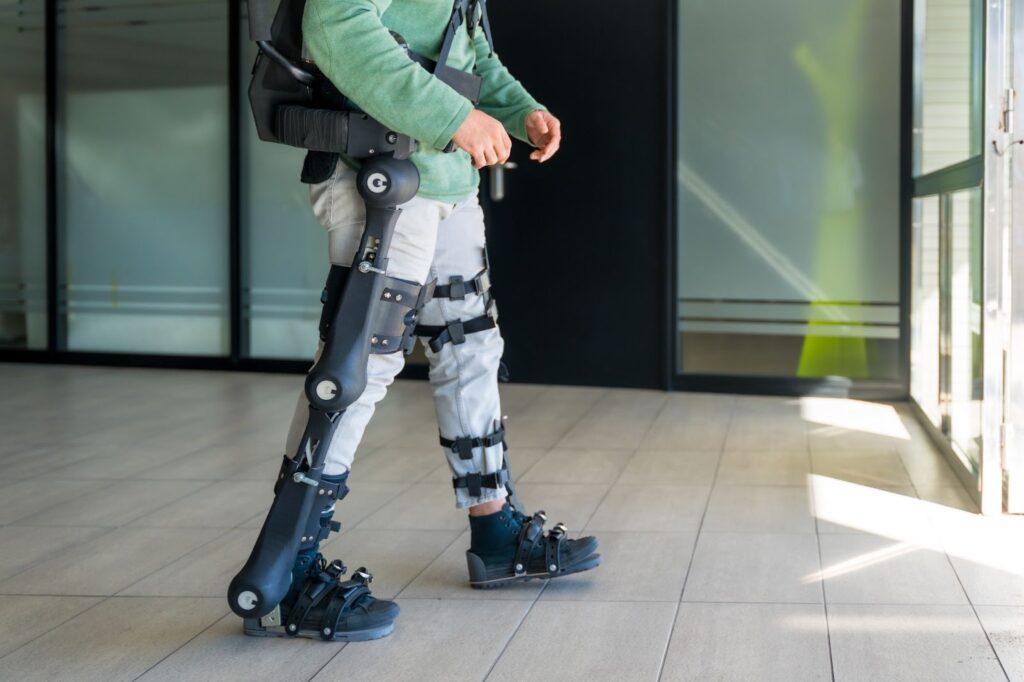
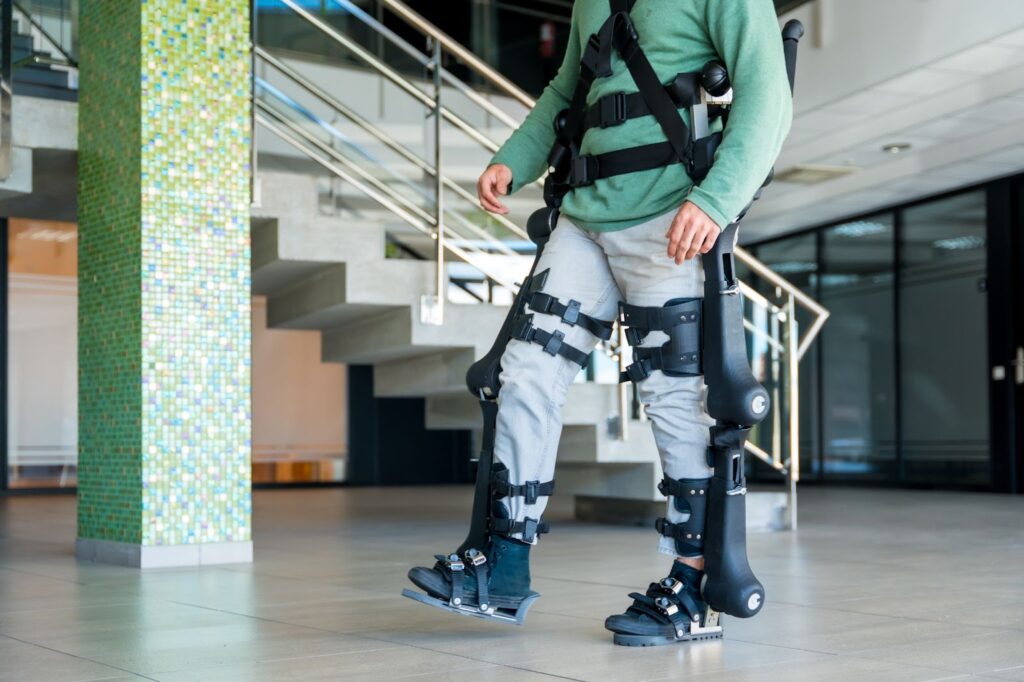
Exoskeleton support is changing the way we think about mobility. These wearable devices are offering real solutions for people with disabilities, injuries, and even those in physically demanding jobs. By providing extra strength and stability, exoskeletons are helping users regain the ability to walk and move with greater independence.
Take the first step towards feeling better. Our exoskeleton technology can help you regain movement and independence. Get in touch with KJ Therapy Singapore to start your journey.
Exoskeleton Support at Work: How They Help Today
Several leading companies are paving the way in exoskeleton support technology. Ekso Bionics, Lifeward, and Honda are among the key innovators, continuously advancing the design and functionality of exoskeletons.
These devices are no longer confined to the realm of science fiction; they are in use today in healthcare, the military, and construction, providing real-life applications for those who need them most.
In healthcare, exoskeletons are helping patients with spinal injuries, strokes, and neurological conditions regain mobility. By providing powered assistance, they enable standing and walking during rehabilitation. Some models adapt to the user’s natural movements, making therapy more effective and improving recovery outcomes.
In the military, exoskeletons help soldiers carry heavy loads with less effort, reduce joint strain, and boost endurance. These devices enhance movement, allowing soldiers to perform better in both combat and training while lowering the risk of long-term injuries.
In construction, exoskeletons help workers prevent strain-related injuries by supporting the back, shoulders, and legs. They make lifting heavy objects easier and reduce fatigue during repetitive tasks like overhead work, increasing both safety and productivity on the job.
The Latest Advances in Exoskeleton Support Technology
One of the most major developments is the introduction of AI-powered controllers. Researchers at Georgia Tech have created a controller for robotic exoskeletons that can assist with dynamic leg movements. This means users can now perform complex actions, like lunging or jumping, with ease and precision.
Moreover, German Bionics recently unveiled the Apogee Ultra exoskeleton that lifts up to 80 pounds and supports walking, offering solutions to workers in high-demand environments. It highlights how exoskeletons are becoming essential tools for increasing productivity and safety in various industries.
Challenges and Limitations
While the progress is undeniable, exoskeletons still face several challenges. One major barrier is cost. Many of the current devices are expensive, making them inaccessible to a large portion of the population who could benefit from them.
Battery life and weight are also concerns, with some exoskeletons being bulky and requiring frequent recharging. Regulatory and safety standards must also be addressed to ensure these devices are both safe and effective for long-term use.
Emerging Trends and Future Directions
The future of exoskeleton support is filled with exciting possibilities. One key area of growth is the integration of artificial intelligence. AI will enable exoskeletons to become more intuitive, learning from the user’s movements and adapting in real-time.
This could lead to mind-controlled devices that move seamlessly with the user’s intentions, improving the overall user experience.
Another development is the rise of soft robotics. These flexible exoskeletons are designed to offer more natural movement, improving comfort and usability for daily tasks. They could be the next step in making exoskeletons more practical and accessible to a wider range of people.
Looking ahead, the potential for exoskeleton support is immense. Advances in AI and lightweight materials are expected to improve both performance and comfort. Devices will likely become even more efficient, lighter, and smarter.
We may also see the integration of exoskeletons with other technologies, such as smart home systems, to create a more seamless and independent lifestyle for users.
Conclusion
The future of exoskeletons holds the promise of a world where injury or age doesn’t limit movement. These new developments offer more freedom, helping people live independently and safely. As the technology keeps improving, the potential to boost mobility is huge. Keep an eye on this technology—it could change the way we live and move sooner than you think.
Take the first step towards feeling better. Our exoskeleton technology can help you regain movement and independence. Get in touch with KJ Therapy Singapore to start your journey.
Explore Our Product
Take a look at our collection of exoskeleton robot and devices that are focused in helping stroke patient back up on their feet.